A 0–100 health score
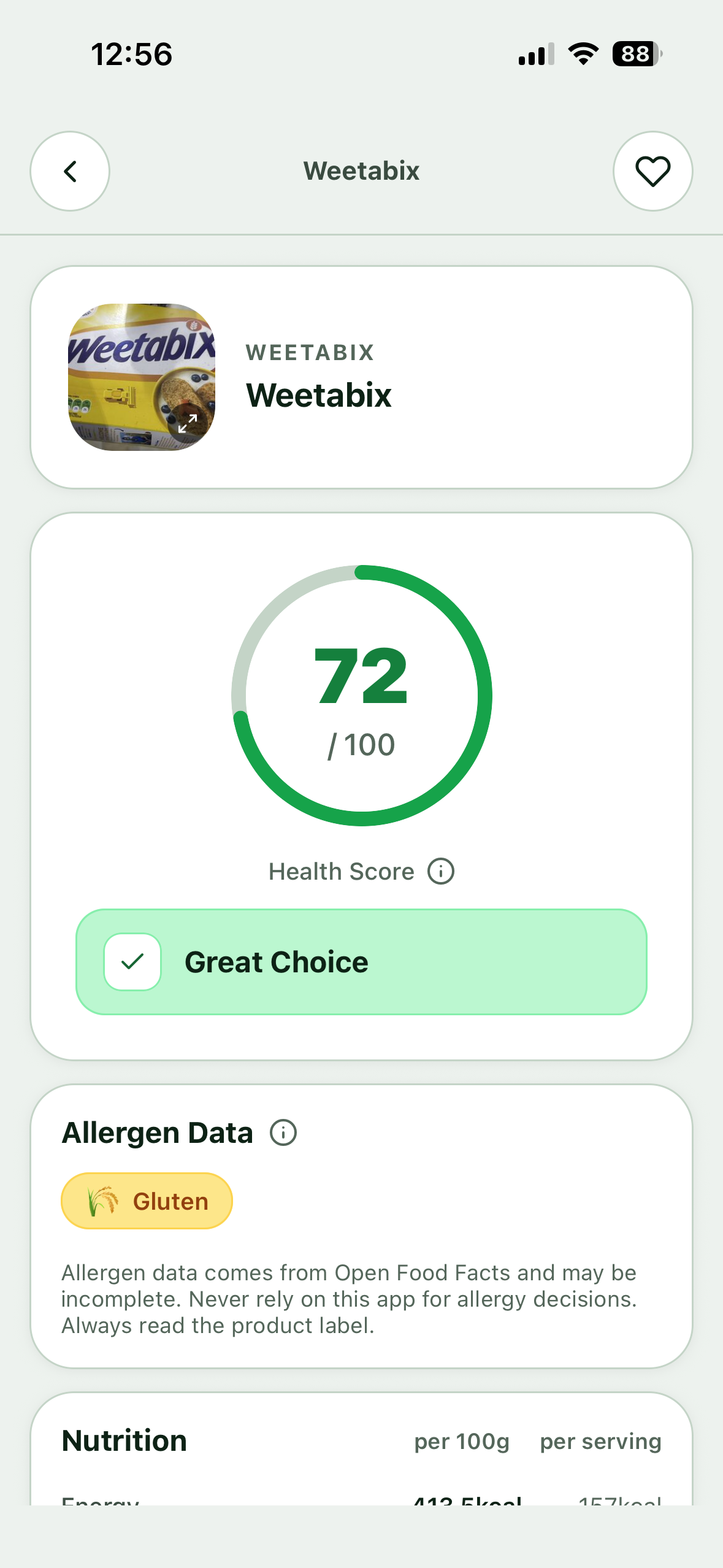
Processing, additives and nutrition folded into one number, higher is better — so you can compare two products at a glance.
How the score works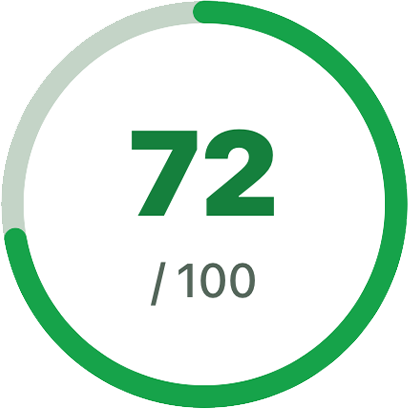
Scrannr is a processed food scanner for UK shoppers. Scan any barcode to see how processed a food is — its NOVA processing group from Open Food Facts, the additives and E-numbers worth a second look, and the salt, sugar and saturated fat behind its 0–100 health score.


Start your free trial. No account needed · Made in the UK.
Almost everything we eat is processed in some way — the NHS defines a processed food as any food or drink that has been changed when it's made or prepared. That includes harmless things like bagged salad, tinned beans and cheese. "Ultra-processed" is the part worth watching: the NHS describes ultra-processed foods (UPF) as foods that have been through more processing and often include ingredients you wouldn't usually have at home, such as preservatives, sweeteners and emulsifiers.
The label most researchers use is NOVA, a classification that sorts foods by how they're made rather than by their nutrition. It splits food into four groups:
Whole or minimally processed foods: fresh fruit and veg, plain meat, eggs, milk, plain yoghurt.
Culinary ingredients you cook with: oils, butter, sugar and salt.
Group 1 foods with Group 2 added: tinned veg, cheese, freshly made bread, cured meats.
Industrial formulations with additives and ingredients you wouldn't cook with: many soft drinks, packaged snacks and ready meals.
An honesty note. NOVA is a research framework, not UK law — the Food Standards Agency doesn't have an official UPF category. The NHS says most people would benefit from eating less ultra-processed food that's high in saturated fat, salt or sugar, but a food's processing group is a useful signal, not a medical verdict. Read our full guide to ultra-processed foods.
You don't have to decode an ingredient list in the aisle. Scan the barcode and Scrannr does the reading for you.
Point your phone at any barcode and Scrannr looks the product up in Open Food Facts and shows you three things that reveal how processed it is:
Where a product's data is incomplete in Open Food Facts, some of this can be missing — coverage grows as the community adds and improves entries. See how the health score works.
One scan turns a barcode into a clear read on how processed a food is — the group, the additives, the nutrition and the score.
Processing, additives and nutrition folded into one number, higher is better — so you can compare two products at a glance.
How the score works
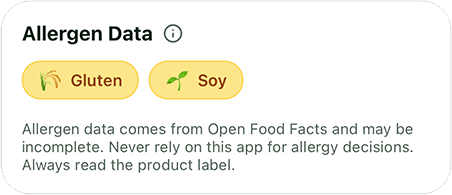
The allergens on file, surfaced so you can spot what to avoid — always check the label if you have an allergy.
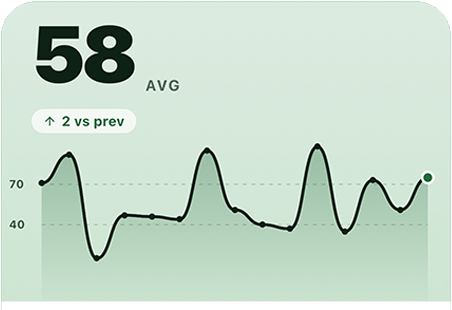
The nutrition many ultra-processed foods are high in, surfaced behind the score.
The NOVA processing group from Open Food Facts, plus the additives and E-numbers worth a second look, flagged in plain English.
Are additives safe?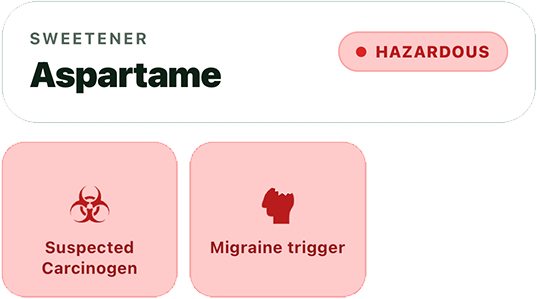
Long lists of E-numbers are one of the clearest signs a food is ultra-processed, but an E-number isn't automatically something to fear. In the UK and EU, every food additive is identified by an E number and its safety is assessed before it can be used in food. The regulator, EFSA, evaluates additives, sets an Acceptable Daily Intake where needed, and is working through a re-evaluation of additives approved before 2009.
Scrannr's job isn't to alarm you — it's to translate. It flags the additives worth a second look in plain English so you can decide for yourself, rather than leaving you to Google "E471" in the middle of a supermarket. Are food additives safe? Read the guide.
Keep it in perspective. The evidence linking ultra-processed food to poor health is still developing. A 2023 UK review by SACN found the association is real in the data but hard to separate from the fact that many UPFs are simply high in salt, sugar and saturated fat. Treat the processing group as a helpful signal, and read the label for what matters to you.
Want the full picture on any food, not just how processed it is? See how Scrannr works as a UK food health scanner. Comparing your options? Read our honest guide to the best food scanner apps in the UK, or the head-to-head Scrannr vs Yuka. For the background, see what ultra-processed foods are and whether food additives are safe.
Start your free trial. Scan your first product in seconds.